


| Category | Cancer Treatment |
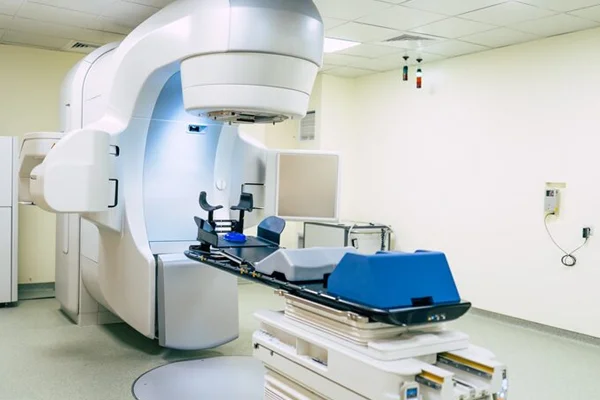
Modern radiation therapy has evolved significantly with advanced techniques that help radiation oncologists deliver treatment with greater precision. VMAT in Dwarka, or Volumetric Modulated Arc Therapy, is an advanced form of external beam radiation therapy that delivers radiation while the treatment machine rotates around the patient.
VMAT allows the radiation dose and beam intensity to be continuously adjusted during the rotation. This can help create a treatment plan that closely conforms to the intended target while taking nearby healthy organs into consideration.
Dr. Mohit Kadian provides radiation oncology consultation and individualized treatment planning based on the patient's cancer type, tumour location, stage, medical history, and treatment objectives. VMAT may be recommended when an advanced radiation delivery technique can provide suitable dose distribution and treatment efficiency.
Volumetric Modulated Arc Therapy (VMAT) is a modern radiation therapy technique in which the linear accelerator rotates around the patient while continuously changing several treatment parameters.
During treatment, the machine can adjust:
These changes occur as the machine moves around the patient, allowing radiation to be delivered from multiple angles during one or more arcs.
Before treatment begins, specialized computer software creates an individualized treatment plan. The plan aims to deliver the prescribed radiation dose to the target while minimizing unnecessary radiation exposure to surrounding healthy tissues as much as reasonably possible.
VMAT is used to provide highly conformal radiation treatment for selected cancers and treatment situations.
It may be particularly useful when:
The decision to use VMAT depends on the patient's diagnosis, treatment objectives, tumour characteristics, and radiation planning requirements.
Choosing VMAT in Dwarka may provide several potential advantages as part of an individualized radiation therapy plan.
VMAT allows radiation dose and intensity to be modulated continuously as the treatment machine rotates around the patient.
The technique can help create radiation dose distributions that conform closely to the shape of the treatment target.
During treatment planning, the radiation oncology team considers surrounding organs and tissues to reduce unnecessary radiation exposure where possible.
Because radiation can be delivered while the machine rotates around the patient, VMAT can provide efficient treatment delivery in appropriately selected cases.
Each VMAT plan is designed according to the patient's anatomy, tumour location, prescribed radiation dose, and treatment goals.
The VMAT treatment process involves detailed planning and verification.
Dr. Mohit Kadian evaluates the patient's diagnosis, medical history, pathology reports, imaging studies, previous treatments, and overall treatment requirements.
A planning CT scan is generally performed to provide detailed anatomical information. The patient is positioned in a reproducible treatment position.
The radiation oncology team identifies the tumour or treatment target and outlines nearby organs that need to be considered during treatment planning.
Specialized treatment-planning software calculates how radiation should be delivered. The plan determines beam intensity, dose rate, machine rotation, and other technical parameters.
The radiation oncology team evaluates the proposed radiation dose distribution to determine whether the treatment objectives can be achieved while appropriately considering nearby healthy structures.
Before radiation delivery, patient positioning is carefully checked. Image-guidance techniques may be used when clinically appropriate.
The linear accelerator rotates around the patient while delivering the planned radiation. Radiation intensity and other machine parameters are adjusted continuously according to the treatment plan.
Patients are monitored during the treatment course. The radiation oncology team assesses treatment-related effects and provides appropriate supportive care.
VMAT and IMRT are both advanced radiation therapy techniques that allow radiation intensity to be modulated.
IMRT delivers radiation using multiple beam directions with varying radiation intensities.
VMAT delivers modulated radiation while the treatment machine rotates around the patient, continuously adjusting treatment parameters during the arc.
Both techniques can provide highly conformal radiation dose distributions. The choice between them depends on the patient's anatomy, cancer type, treatment goals, and treatment planning requirements.
VMAT and IGRT perform different functions and can be used together.
VMAT is primarily a radiation delivery technique that modulates radiation during machine rotation.
IGRT, or Image-Guided Radiation Therapy, uses imaging before or during treatment to verify patient positioning and target alignment.
Using image guidance with VMAT may help the radiation therapy team confirm that the patient's treatment position corresponds appropriately with the planned treatment setup.
VMAT may be considered for selected patients whose radiation treatment requires advanced dose modulation and conformal planning.
It can be used for various cancer treatment situations, including selected cases involving:
Not every patient requires VMAT. A detailed evaluation is necessary to determine whether it provides an appropriate treatment advantage for the individual case.
Before the first treatment session, the radiation oncology team completes treatment planning and verification.
During treatment, the patient lies on the treatment table in the prescribed position. The treatment machine moves around the patient while delivering radiation according to the planned arc.
Patients are generally asked to remain still during radiation delivery. The treatment team remains nearby and monitors the session throughout.
The actual radiation delivery may be relatively short, although the complete appointment can take longer because of positioning and verification.
The number of treatment sessions depends on the prescribed radiation schedule.
VMAT is a method of delivering radiation, so potential side effects are mainly related to the area receiving radiation, the total radiation dose, the number of sessions, and individual patient factors.
Depending on the treatment area, possible effects may include:
Side effects vary from person to person. The radiation oncology team monitors patients throughout treatment and can provide guidance for managing treatment-related symptoms.
Recovery after VMAT depends on the cancer being treated, the treatment area, total radiation dose, overall health, and whether other cancer treatments are being provided.
Patients should follow the instructions provided by their treating team. Adequate rest, appropriate nutrition, prescribed medications, and scheduled follow-up can support overall cancer care.
Patients should inform their medical team about persistent, severe, or unexpected symptoms during or after treatment.
Follow-up may involve clinical examination, imaging, blood tests, or other investigations depending on the patient's diagnosis and treatment plan.
Dr. Mohit Kadian provides radiation oncology consultation and personalized treatment planning for patients requiring radiation therapy.
For patients seeking VMAT in Dwarka, treatment planning involves a detailed assessment of the cancer diagnosis, tumour location, imaging findings, prescribed radiation dose, and relationship between the treatment target and surrounding organs.
When VMAT is considered appropriate, an individualized plan is developed to optimize radiation delivery according to the patient's clinical requirements.
A consultation with Dr. Mohit Kadian can help patients understand whether VMAT, IMRT, IGRT, or another radiation therapy approach may be suitable for their condition.
VMAT stands for Volumetric Modulated Arc Therapy. It is an advanced external beam radiation therapy technique that delivers modulated radiation while the treatment machine rotates around the patient.
VMAT allows radiation delivery parameters to be continuously adjusted during machine rotation, helping create highly conformal treatment plans in appropriately selected cases.
No. VMAT is recommended only when it is appropriate for the patient's cancer type, tumour location, anatomy, and treatment objectives.
The radiation delivery itself is generally not felt. However, radiation therapy can cause side effects depending on the treatment area and radiation dose.
Yes. VMAT and IGRT can be used together when clinically appropriate. VMAT manages radiation delivery, while IGRT helps verify patient positioning and treatment alignment.
Neither technique is universally better. Both can provide advanced radiation dose modulation. The appropriate technique depends on the patient's anatomy, tumour characteristics, treatment goals, and treatment plan.
The radiation delivery itself can be relatively quick, but the total appointment includes patient positioning and verification. The exact duration varies according to the treatment plan.
Patients looking for VMAT in Dwarka can consult Dr. Mohit Kadian for cancer evaluation, radiation treatment planning, and guidance regarding advanced radiation therapy options.


